Living on the Edge – and Finding Community in Moshi

I’ve always lived life on the edge, though not because I go looking for danger. Somehow, just getting out of bed seems to provide endless opportunities to test my limits. I’ve never broken a bone, but concussions, stitches, sprains, strains, and bruises have been part of my life for as long as I can remember. I’ve mastered the art of tripping over my own feet while standing still, finding the only hole in the garden, or even—on more adventurous days—falling out of cupboards. My mom swears it’s because I’m a typical Sagittarian.

Since moving to Moshi, I’ve discovered new ways to push my limits—though in the process, I’ve also found something unexpected: a community that steps in without hesitation, whether it’s helping with my kids, running out of meetings, or just showing up when I need it most.

My first real test came not long after we arrived. After a tough run, I turned the corner toward home, where three dogs always lounged in the road. They’d been around longer than we had, enjoying life outside a neighbor’s broken gate. I had passed them many times before, but this time they came after me. The three bigger dogs surrounded me and bit me on the leg and bum while their sickly puppy looked on. I screamed until someone came out and the dogs finally scattered.

Phil was away for work, so we called a friend, who dropped everything. He looked after my kids, dealt with the doctors, and helped us find the right medication. What followed was weeks of uncertainty while we waited for the dogs to be collected and tested—and to see if I would develop any symptoms.

As I lay on the bed at the local clinic, I had to laugh a little. The scene felt straight out of “old Africa”: nurses in white dresses, instruments wrapped in green sterilized cloths. It was a far cry from the polished Hilton Life Hospital we were used to back home. Still, I was treated with dignity and constantly reassured. The rabies and tetanus shots had to be bought over the counter at a pharmacy and then carried to the clinic for the nurses to administer.

One injection fell on a Sunday, when the clinic was normally closed. They told me to be there at 10; in true African time, the nurse arrived closer to 11. I sat on the veranda with a mother and her son, waiting for the fridge outside to be unlocked so my injection could be taken out. When it was finally over, I left with a signed paper in hand. By the time I went in for my last shot, the staff actually celebrated with me. It was then I realized—I had gained not just medical care, but a community I could trust.

Fast forward a bit, past the usual bumps, bruises, and even a sourdough bread burn, and I once again needed help. After a Friday morning coffee with a group of moms I’d recently met (all with kids the same age, from all corners of the world), I decided to make watermelon ice for the boys. What could possibly go wrong?

Quite a lot, apparently. While blending, I managed to slice my finger on the hand blender, spraying blood everywhere. Lightheaded, I called Phil—who immediately dropped his meeting, jumped on a bodaboda, and came home. Once again, I found myself at the now-familiar clinic, greeted by friendly, familiar faces.

When I explained what had happened, the staff exchanged looks that said, “Really? Again?” The doctor had a quiet chuckle at my stupidity before remarking, “First the dogs, then the blender—God only knows what’s next.” This time the sympathy was limited (fair enough—stupidity doesn’t deserve much sympathy), but I was treated quickly and kindly. After an x-ray in a simple, no-frills room with an old machine, the verdict was no major damage—just a good scrub, some skin stick, and instructions to rest.

Meanwhile, another friend collected my boys—and hers, who was meant to be coming over—from school, fed them, and took them all to taekwondo. No hesitation, no fuss, just pure kindness.

That’s what I’ve found here in Moshi. My community is different—it’s made up of friends, colleagues, and parents, all working together to support each other. I’m forever grateful for people who, without really knowing me or my family, are willing to drop everything to help.

Hopefully, my guardian angel decides I’ve tested the limits enough for now—and that from here on, I can stick to just minor bumps and bruises.

Living the Dream“From Childhood Adventures to Kilimanjaro Dreams”

Living the dream

I’ve always been an outdoor person. I grew up on a farm with two younger brothers, and most of our childhood was spent outside—barefoot, muddy, and endlessly curious. We were always on an adventure. We chased rainbows in search of pots of gold, climbed into bushpig holes for school projects (yes, really), got thoroughly lost in mielie fields, and waged imaginary wars against the terrifying agapanthus flowers. Our world was wild and wonderful, and often filled with friends and cousins who joined in the chaos.

Family holidays were much the same—fishing trips, game drives, and the occasional camping expedition, but always grounded in togetherness, adventure, and the great outdoors. When I was 16, my dad and I walked through the Kruger National Park on foot. It was magical—one of the most unforgettable experiences of my life. That walk sparked another dream: climbing Mount Kilimanjaro. Ever since, my dad and I have spoken about it, half-serious and half in awe. It always felt like one of those things that lived in the “one day, maybe” category.

But yesterday, as the clouds lifted and the snow-covered summit of Kilimanjaro revealed itself, I sat in silence, staring. The mountain stood there, towering and majestic, and I couldn’t believe that more than two decades after the first dream, I’m here—living at its base, watching it emerge and disappear with the clouds.

It feels surreal. That old dream doesn’t feel so far away anymore. Now, it feels possible. Maybe, just maybe, it’s about to come true.

One Month in Moshi: Slow Days, Fast Changes

Our first month in Moshi has somehow flown by at a snail’s pace. It’s hard to believe we’ve only been here just over four weeks—it feels like we’ve packed six months of life into that time. As exciting as this adventure has been, it hasn’t been all smooth sailing. Anyone who has moved towns, provinces, countries—or entire continents—will understand the rollercoaster of emotions that come with it.

The boys were at school for three short weeks (honestly, I think they’ve spent more time on holiday this year than in a classroom). They loved their little school, and we were welcomed with open arms. My big boy has fully embraced the new culture around him—he’s completely fascinated by the Maasai, especially the men and their distinct way of dressing. Every time he spots one, he lights up and waves as if he’s just seen a celebrity.

My littler shadow has taken a bit longer to settle. He was happy once at school, but the morning goodbyes were tough. And, just as he was finding his rhythm, the holidays began. Classic timing.

Despite the short school stint, the boys have made friends and are slowly adjusting to a very different way of life. One of the biggest differences? Here, homes are always open for kids to come and play. It’s been a refreshing change after years in South Africa where COVID really put a damper on playdates and birthday parties. The boys are still learning how to navigate social play in a more casual, unstructured environment—sharing, negotiating, making up games without jungle gyms and themed activities. It’s been a learning curve, but such a good one.

As for me, I’m still finding my feet. Some days I feel incredibly grounded, surrounded by a budding village of support. Other days I feel a bit lost, wondering what I’m doing here and why I thought I could manage it all. But I know this is part of the process—adjusting takes time. I’ve learned that on hard days, putting on my running shoes and hitting the pavement does wonders for my mood. When I feel better, the boys seem to settle more easily too. There’s a lesson in that, I think.

One thing I wasn’t quite prepared for? The rain. When Philip left South Africa for Moshi in March, the boys and I stayed behind for another eight weeks—and it rained for about 90% of that time. The garden was a swamp. Clothes wouldn’t dry. It was wet, wet, wet. Then we arrived in Moshi and, believe it or not, it’s been raining here almost every day too. Mostly in the evenings or early mornings, but still—mud, puddles, soggy shoes. The good news? It’s not cold. The temperature hovers between 18 and 24°C, and we’re definitely not missing the biting South African winter.

Our adventures so far have mostly stayed close to home, with one much-needed escape to Tanga for some vitamin sea. Otherwise, life has been about settling in, meeting people, and easing into routines. The growing South African community here has made Saturdays feel a little like home—rugby, braais, and good-natured debates with American friends about why rugby clearly beats American football. (We’re still working on converting them.)

Navigating Moshi itself has been an experience. The markets are vibrant, chaotic, and bursting with life. Driving our big Toyota Hilux through the maze of people, bajajs, motorbikes, and the occasional wandering chicken has been both terrifying and thrilling. I was told if you could drive in KZN you could drive anywhere in SA—but here? Add in no traffic lights, minimal signage, and a first-come-first-served system and you’ve got a whole new level of chaos.

At home, we’ve found peace in unexpected ways. Birdwatching has become a favorite pastime. We’ve been lucky to spot a pair of palm-nut vultures—rare for this area—and they now visit regularly, squabbling with crows and soaring above the garden. At night, we keep an eye out for hedgehogs scurrying about, and during the day, squirrels race through the trees while monkeys swing by in noisy troops. The garden has become a haven—for the wildlife and for us. A quiet, green bubble where we can breathe.

Despite the bumps in the road, we’ve reached a turning point. We’re living a dream that we’ve held close for years. It’s not a fairy tale. It’s slow, messy, and real—but it’s ours. Each day, this place feels a little more like home. And I can finally start to picture us here for the long haul.

Support on the Trails & Running for Freedom

I’ve always enjoyed running. Not in a sleek, gliding-Gerda-Steyn kind of way, but more like an elephant stomping around a marula tree. Graceful? Not quite. But there’s something deeply grounding about it—especially here, where the trail demands your focus. There’s no time to spiral into thought when each step needs your full attention. And honestly, that’s part of the therapy.

Since moving to the side of a mountain, I feel like I’m starting from scratch—again. The usual aches and breathless climbs are back, but the altitude (and gravity) works in my favour… as long as I’m heading downhill. Still, every run brings a small boost of confidence, a reminder that I’m moving forward—literally and figuratively.

Trail Encounters

Out here, the runs aren’t just about pace or distance. They’re about people. I’ve settled into a few familiar routes where faces have become friendly nods, and I’ve even picked up the occasional running companion. One of them is a young man I often cross paths with—me in my high-end running gear, him in worn Crocs and dusty work clothes. And yet, there we are, side by side for a few hundred metres, him often unknowingly pushing me to run harder than I ever plan to.

He once invited me to karaoke over club music—not quite my style—but what he said during one of our quick sprints stuck with me. With a wide grin and zero breathlessness, he said, “Running is the closest thing to real freedom. You can go as fast or as slow as you like, wherever you like. Unless you’ve been in prison, you’ll never understand what that really means.”

That hit me. No, I’ve never been in prison, and I don’t intend to, but in that moment, I caught a glimpse of what he felt. Running can be liberating. The kind that cuts deeper than fitness goals or finish lines.

Wild Beauty, Real Africa

Running here is never boring. It’s colourful, chaotic, and sometimes heart-breaking. You’re always aware—of people, of traffic, of life rushing around you. Bajaj’s (tuk-tuks) and boda-bodas fly by with little regard for pedestrians. You learn quickly: you’re at the bottom of the road hierarchy, a moving target on two legs.

And then there are the moments that remind you—this is Africa. Once, I saw a dog hit by a bike and fly across the road. Another time, a smell on the wind nearly made me lose breakfast. But the flip side? Unmatched support. Old men cheer from roadside “coffee shops” yelling, “Run baby, run!” Passer-by’s clap and call out encouragement, strangers celebrate your effort like you’re in a city marathon.

Sights and Sprints

You see things here you’d never spot from a car. An entire house worth of furniture balanced on a tiny Chinese motorbike. A forgotten golf course that’s more grassland than greens. A bridge hidden beneath the trees where the river sings louder than your thoughts. Banana plantations tangled with children’s laughter from nearby classrooms.

One day, I saw a bajaj stall at the base of a hill. No panic. His friend in another bajaj pulled up behind, stuck out his foot, and gave him a push—barefoot power steering at its best. Together, they conquered the speed bumps and the bend in the road, laughing all the way.

From Elephants to Gerda

Running has become more than a hobby—it’s a moving meditation, a micro-adventure, a way to reconnect with my goals and let go of the noise. It’s the reason I keep coming back, even after long breaks and sluggish starts. Maybe this will be my last “start again.” Maybe I’ll finally build toward the goals I keep tucked away in my mind.

For now, I’ll keep pounding the trails—elephant-style. Because even if I never glide like Gerda, I’ve found freedom in the run, and support where I least expect it. And that’s more than enough reason to lace up and try again tomorrow.

Navigating Chaos and Curtains: A Market Day Victory

Last Saturday, I decided to brave a solo mission to the local Memorial Market—a buzzing, chaotic hub of clothing, shoes, and homeware. It’s not the kind of market you stroll through leisurely. It’s alive with loud music, voices calling out from every direction, chickens darting between stalls, and people absolutely everywhere. In a word: chaos.

My goal? Curtains for the boys’ bedrooms. Blue to match the Paw Patrol room and green for the camo-themed one. I’d been in touch with a lovely local lady who had helped me with our bedroom curtains previously. She has a stall at the market, had sent me photos of her available stock, and all I needed to do was go collect and pay.

While I was at it, I figured I might as well have a look for something for the living and dining rooms too. But I’ll admit—I was nervous. I’d only been to the market once before and wasn’t sure I’d be able to find her again in the maze of stalls. But I had a rough idea: drive straight through the middle, take a turn up the road, and she should be on the left. Thankfully, she was expecting me—and I stood out enough from the regular crowd that I wasn’t too hard to spot.

Habari dada, karibu!” was the warm greeting I received. We chatted, she made a few adjustments to the curtains, and I took the opportunity to explore.

With a few items in mind, I strolled around. Over the loudspeakers came the constant chorus of “Mambo! Habari! Karibu! Looking is free!” It was a slow morning, so any small sign of interest was met with enthusiastic persuasion. After about 30 minutes of wandering, I decided it was time to head back and collect my curtains.

Easier said than done.

I headed in the direction I thought was correct. I walked up through the narrow lanes, but somehow got stuck in a loop. I passed the same stands so many times that the stallholders eventually stopped trying to sell me anything—probably assuming I was just another lost mzungu who wasn’t going to buy. I did stand out a bit, so by the third pass they’d shifted their attention to other customers.

Eventually, with a combination of luck and sheer stubbornness, I made it back to the curtain stall. Curtains in hand, I now had one final challenge: finding the car. I put my head down and powered straight ahead, refusing to stop, smile, or get distracted. I ended up in a completely different spot from where I thought I’d parked—but there it was. Victory.

For some, this might seem like a simple errand, but for me it was a small, hard-won triumph. I love markets, but I can easily get overwhelmed in busy spaces. On our last visit, I leaned heavily on my husband to navigate. And let’s be honest—I can get lost in my own back garden. So, finding my way through the maze of energy, people, music, and movement all on my own? That was a big win.

Sometimes it’s not just about getting the curtains—it’s about proving to yourself you can.

A Tapestry of Belonging: Finding Community in Moshi

Living in Moshi has opened our lives to a beautiful tapestry of cultures and people. We’ve made friends from all over the world—individuals we likely would never have crossed paths with in other circumstances. Back home, in South Africa, our social circles were often defined by industry, income, and lifestyle. But here, none of that seems to matter. We’ve all landed in this small town for different reasons, and somehow, we’ve all chosen to call it home. The result is a support system that cuts across cultures, professions, and backgrounds.

In South Africa, especially in the area we lived, there was always a subtle (and sometimes not-so-subtle) pressure to keep up—drive the latest car, live in the right neighbourhood, take the aspirational holidays. We were surviving, yes—but constantly trying to thrive in a system that often felt stacked against us.

Now, we’re thriving in a way that’s deeply human. There are only two schools, and whether you can afford the international one or not, your kids will find friends at both. It’s not about status. You can be a CEO or a preschool teacher, and people will treat you the same. It’s a level of acceptance that’s hard to put into words.

This shift in attitude made me reflect on my own experience as a teacher. In South Africa, I sometimes felt almost embarrassed to say I was a preschool teacher. I have a degree, years of experience, and poured my heart into creating a safe and nurturing space for young children—but I’ve seen that momentary pause in people’s faces, that flicker of “Oh, just a preschool teacher.” It’s subtle, but it cuts deep. The unspoken hierarchy of professions is real.

But here? When I tell people I’m a foundation phase teacher and that I’ve worked in preschools, there’s respect. Genuine respect. Because here, people seem to understand that teaching the youngest members of society is one of the most important jobs there is. Without us, there would be no doctors, no engineers, no CEOs. Every profession begins in a preschool classroom.

This kind of discrimination—based on profession, nationality, or social standing—isn’t limited to just South Africans. I recently had a conversation with a friend, a highly successful businesswoman from another African country. She shared how, whenever she visits South Africa, she and her family are treated with suspicion. Simply arriving at the airport marks them as potential targets. There’s an assumption they’re there to shop—carrying wads of foreign cash—and they’re often followed, harassed, or worse. She’s experienced terrifying moments, including family members being held at gunpoint. Just for being African in South Africa.

It’s a painful truth: discrimination is embedded in the fabric of South African society. It’s so normalised we often don’t even realise we’re doing it. We don’t mean to be unkind—but it’s second nature, and that’s what makes it so dangerous.

Here in Moshi, we live in an upmarket suburb in a modest home. We drive a bakkie. Things we could only dream of doing comfortably in South Africa, we do here without judgement. On our street, there’s a little shamba growing beans, a student house, a derelict building, and some large family homes—all sharing the same space. No one blinks an eye. Everyone is welcome.

When you walk the neighbourhood, you greet everyone you see. Karibu—you are welcome—isn’t just a word here. It’s a way of life. People aren’t watching you to catch you out, to make you feel small or inadequate. They’re watching out for you—to help, to support, to lift you up.

It’s a refreshing change. A patchwork of people, cultures, and kindness that I’m proud to be part of. And one where my watotos can grow up feeling part of a global, welcoming community—not one rooted in isolation, fear, and comparison.

A Quick Escape: Finding Magic Just South of Tanga

One of the biggest reasons we made the move to East Africa was the opportunity to explore this incredible continent. My husband has been lucky enough (or brave enough!) to travel and work in various African countries over the years. Until recently, the only African destination I’d ticked off was Mozambique — a place I absolutely adore.

Then, a few weeks ago, while chatting with a company in South Africa, my husband was offered a quick work trip to a spot just south of Tanga. It was meant to be a solo two-night visit, but as we sat down late Sunday afternoon, we wondered, what if the boys and I joined him? A quick phone call to the guesthouse confirmed they had space — so we pulled the kids out of school, packed our bags, and by Monday morning, we were off.

We left later than planned (isn’t that always the case?), knowing the journey would take longer than expected. Though it was only a few hundred kilometers, with a 50km/h speed limit and police checks galore, it was going to be a slow and steady road trip. There are no highways like we’re used to in South Africa — just narrow two-lane roads that sometimes feel more like a game of dodgems than driving. But the beauty of “pole pole” (slowly, slowly) is that it forces you to soak in the scenery — and wow, what scenery it was.

Our journey took us through mountain passes and tiny villages, past flooded rice paddies and banana plantations heavy with fruit. We crossed crystal-clear streams and saw stretches of spiky sisal fields. The landscape shifted constantly, each view more stunning than the last. As we neared the coast, a contest broke out in the car — who would be the first to spot the sea? And then, suddenly, there it was: a ribbon of turquoise on the horizon, calling us closer.

The beach was everything we’d hoped for. Palm trees heavy with coconuts swayed in the breeze. Towering baobabs stood watch over the shoreline. Dhow boats, weathered by time and passed down through generations, rested on the sand as gentle waves lapped at their sides. Endless stretches of untouched beach lay before us, with mangroves and distant islands painting the backdrop. We hunted for shells, explored the coastline, and took a quiet moment to soak in the raw, unspoiled beauty.

That evening, we were spoiled with fresh seafood as we watched the lights of fishing boats twinkle far out at sea. Instead of the crashing waves we knew from the KZN coast, we fell asleep to the rhythmic hush of calm water just beyond our windows.

At sunrise, the sky was a canvas of light and shadow — beams of sun breaking through dramatic clouds, casting a golden glow on early morning fishermen. The boys and I spent hours on the beach, swimming, climbing palms, watching the dhows come and go, and observing locals harvesting prawns in the shallows. It was peaceful, magical, and just what we all needed.

All too quickly, our brief escape came to an end. That night, under a blanket of stars, we shared stories with our incredible hosts — people who have poured their hearts into building something meaningful here, empowering local communities and preserving this unique corner of the world. We left feeling inspired, rested, and already planning our return.

The drive home was quieter, tinged with the sadness of leaving the ocean behind. The coastline here feels familiar — even if gentler than what we’re used to. But as we wound our way through the hills, one sight brought comfort: our mountain. The one we look for each morning, the one that signals home. Rising suddenly from the land, it watches over us — a reminder of where we’ve been and the adventures still to come.

Rainbows and Rough Days

We don’t tend to do things the easy way. My husband and I have always taken the long route—literally and figuratively. It’s messy, often bumpy, but it’s always full of lessons, and that’s exactly how we wanted this journey to be. Not just the destination, but the getting there—the good, the hard, and everything in between.

Our move to Tanzania wasn’t just a change in scenery. It meant uprooting the boys from the only world they’ve ever known—their routines, their friends, their family. We knew there would be moments of resistance and heartbreak. We expected it. But expecting it doesn’t make it any easier when it arrives.

Our first Tuesday here hit hard. The boys were exhausted from the travel, emotions were running high, and by mid-morning they’d fought for what felt like the hundredth time. After another shouting match (yes, one I contributed to—definitely not my proudest parenting moment), Ethan ran and hid under his bed. His camouflage duvet makes it “invisible,” and for him, it’s the perfect hiding spot when the world feels too big.

I let a few moments pass. Then I heard the sobs—those deep, gut-wrenching cries that shake you to your core. I peeked in and found him curled up, clutching a photo his cousin had given him—the two of them, laughing on top of hay bales, frozen in a moment of joy. My heart shattered. I couldn’t fit under the bed, but I reached out, coaxed him gently, and when he crawled out, I held him in the kind of hug that says more than any words could.

We needed a shift. A reset. So, we piled into Dad’s bakkie and drove into town to find something—anything—for dinner.

That’s when the magic happened.

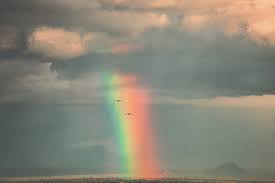
As we drove, the clouds began to part, and through the grey, stretching across the farmland and bush, was a single, bright rainbow. Just hanging there, unapologetically beautiful. Ethan’s eyes lit up. He leaned forward and said softly, “God sent a rainbow to tell the world things will be okay.”

And just like that, we were okay.

That little sliver of colour turned into a symbol—a reminder that through the hardest transitions, beauty still breaks through. It was our sign that we were exactly where we were meant to be. The tears dried, the moods lifted, and we all smiled together for the first time that day.

Our African adventure is far from smooth. But we’re not here for smooth. We’re here for real. And sometimes, all it takes is a rainbow to remind you that even the hardest days have hope hiding in them.

photo thanks to @ziggyq_ found on Instagram and was just to special not to share.

An Afternoon with Mama Rosie

Most afternoons, the boys and I head out for a little walk. It’s become a comforting rhythm in our days here in Moshi—our chance to stretch little legs, breathe in the fresh air, and usually, to visit one of our favourite people: Mama Rosie.

We live along a quiet dirt road just off one of the suburb’s main streets. It’s lined with tall trees, oversized gates, and perfectly trimmed hedges. Here, hedges matter—more than you’d think. They’re more than just plants; they’re a symbol of pride. Whether there’s a grand house behind the gate or a modest shamba, that hedge tells a story. It says something about the person living there—and the person trimming it.

Our walk takes us to Rosie’s fruit and veg stand, a rustic little lean-to under the shade of a tree. If you’ve ever known the charm of the original Piggly Wiggly stand in the KZN Midlands, you’ll understand the vibe—only this one is even simpler, and somehow more charming. Each day, Rosie fills her table with fresh, locally sourced produce. She always greets us with a big, welcoming smile and helps the boys choose the freshest bits for our dinner.

This small ritual has become one of our most treasured routines. The boys love it—chatting to Rosie, choosing which bananas to try this time, inspecting tomatoes or sweet potatoes with exaggerated seriousness. It’s a tiny moment of connection that makes us feel more at home than anything else.

One day, on our way back from Rosie’s, the skies decided to surprise us. A sudden downpour had us running, laughing, and juggling bags of slippery vegetables up the muddy road. Julius, the quiet man who tends to our hedge like it’s a masterpiece, saw us coming. Without missing a beat, he climbed down from his stepladder, dashed to open the gate for us, and gave us a smile that was definitely hiding a giggle. He waved us in, returned to his pruning, and we scampered inside, dripping, laughing, and ready to unpack our rain-soaked treasures.

Every time I reflect on these little moments, I’m reminded why we’re here. We came for a different kind of life—one filled with connection, community, and a bit of the unexpected. Yes, I know there are places in South Africa where you can still walk to the shop, but not where we were. Not like this. Not with someone like Julius waiting at the gate. Not with Mama Rosie waving as we pass.

These small everyday stories—they’re the real adventure.

The path to today

The last 9 months have been a blur, we have had so many ups and downs emotions have been high and nerves have been stretched. Yesterday was our due date the day we were meant to welcome our bundle into the world. But as we know babies don’t always follow the manual, and I wouldn’t change it for the world.

My pregnancy had gone smoothly no major problems until the last few days. I started leaking and after running a few tests I was given the all clear, told to take it easy and let the dr know if anything changed, well that change came on Friday the 13th. In the early hours of Saturday we rushed to the hospital because now I had started bleeding. I was admitted and the tests started hourly blood pressure, heart rate and temperature along with closely monitoring the baby, everything seemed fine. Later on Saturday I was finally able to see the Dr on call (mine was sitting happily in Cape Town) he had been kept informed of what was happening and together we decided that it would be best for the baby to be delivered on Monday giving a few more days for lung development. We excitedly told family and started to prepare ourselves. Our excitement was short lived as the Dr once again entered my room and sat down with a worried look on his face. He had just seen my latest batch of results and things were not looking so good, the c-section was going to be moved forward to 3 that afternoon, giving us 3 hours to get our head around the fact our baby was coming 3 and a bit weeks early.

I was given antibiotics and steroids and we had to give them a chance to pass through me into the baby. As I was wheeled up we were both a bundle of nerves and excitement, the day was here it was not what we had planned and we were in no way ready for this but fears and uncertainty aside we knew the 14th of September would forever be a special day. Everything after that went so fast and next thing I knew we had a beautiful and perfect baby boy. Our excitement turned to worry as our little man wasn’t breathing properly, we had been warned that it was a possibility as his lungs weren’t developed enough. He was rushed to NICU and I was stitched up. It was only at this point that I was told how serious the situation was and how there was no possible way we could have waited till Monday. The leaking had caused an infection which I had passed onto my little man, had we waited we could both have become extremely sick.

D-day was not how we planned it, we dreamed of a quiet and calm natural birth instead our little man burst into our lives in his own special way. The last month has been amazing and I am so glad we got an extra 3 weeks with our precious little boy.